
Twelve men in a hot room, one table, one case, one vote that has to be unanimous. On paper, 12 Angry Men is the least cinematic premise imaginable, a filmed play with no action, no romance and barely a change of scenery. In practice it is one of the most gripping American films of the 1950s, and a textbook demonstration that suspense is not about what happens on screen but about what might change in a person’s mind. Sidney Lumet’s debut feature has been taught in law schools, business courses and civics classes for decades, which is both a tribute and a risk. Treat it as homework and you miss that it is, first of all, a superb piece of entertainment.
12 Angry Men at a Glance
| Released | April 10, 1957 |
|---|---|
| Director | Sidney Lumet, in his feature film debut |
| Writer | Reginald Rose, adapting his own 1954 television play |
| Producers | Henry Fonda and Reginald Rose |
| Starring | Henry Fonda, Lee J. Cobb, E. G. Marshall, Ed Begley, Jack Warden, Joseph Sweeney |
| Cinematography | Boris Kaufman |
| Runtime | 96 minutes |
| Shooting schedule | Less than three weeks |
| Honors | Golden Bear at the Berlin International Film Festival; three Oscar nominations, including Best Picture |
| National Film Registry | Selected in 2007 |
The Premise, and Why It Works
A young man is on trial for killing his father. The evidence looks overwhelming, the jury is tired, the room is stifling, and eleven of the twelve jurors are ready to vote guilty and go home. Juror 8, played by Henry Fonda, votes not guilty. He does not claim the defendant is innocent. He says only that he is not sure, and that a boy’s life deserves more than five minutes of discussion.
Everything that follows grows from that one refusal. Reginald Rose’s screenplay is built like a series of small trials within the trial: a knife, a witness who could not have seen what she claimed, an old man who could not have reached his door in time, a phrase shouted in anger that may or may not mean what it seems. Each piece of evidence is examined, doubted and set aside, and with each one a juror or two changes his vote. The structure is almost mechanical, and it is thrilling precisely because we can see the machine working.
A Room That Gets Smaller
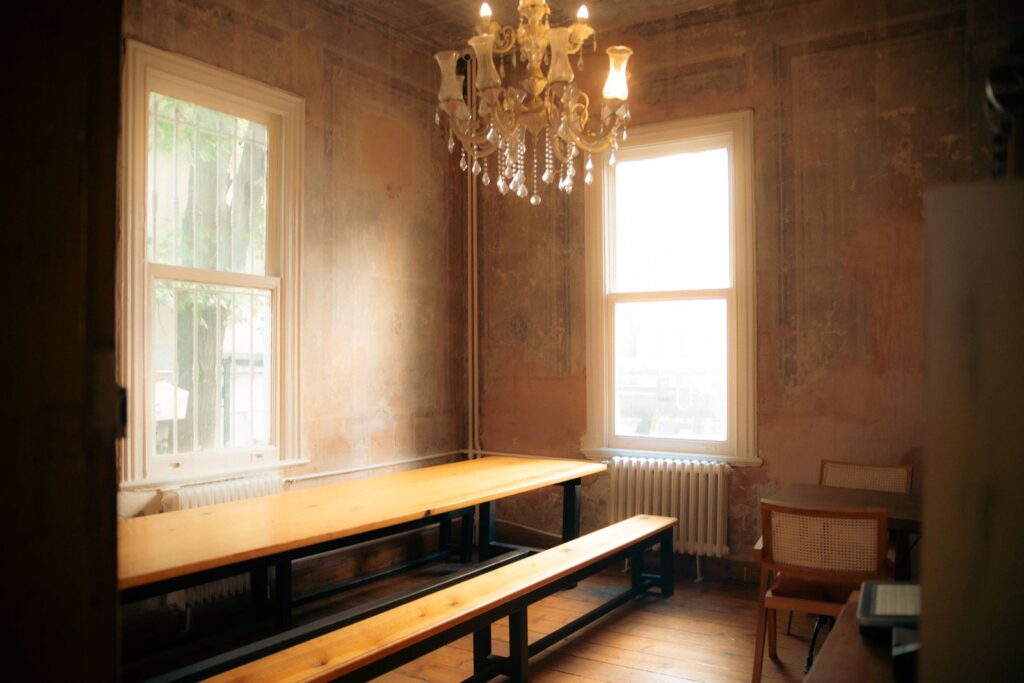
The film’s most celebrated craft choice is also its least visible. Lumet and cinematographer Boris Kaufman planned the camera work so that the room seems to close in as the story goes on. Early scenes are shot from above eye level with wider lenses, giving the jurors space and a sense of the room around them. As the deliberation heats up, the lenses grow longer and the camera drops lower, until by the final act the faces fill the frame and the walls seem to press against them. Most viewers never consciously notice. Almost all of them feel it.
That sense of mounting pressure is matched by the weather, the broken fan, the sweat, the way men who began the afternoon in jackets end it with their sleeves rolled up and their tempers gone. The story unfolds in something close to real time, around an hour and a half, and the film never cheats by leaving the room for long. When it finally does, the open air feels like a release for the audience as much as for the jurors.
An Ensemble Without a Weak Link
Fonda is the film’s moral center, and he plays Juror 8 with a calm, stubborn decency that is more about patience than heroics. What keeps the character from becoming a saint is that Fonda lets us see the effort of staying reasonable. He is not above manipulation himself, and the film is honest about that.
But the real fireworks belong to the men who oppose him. Lee J. Cobb, as the volcanic Juror 3, gives the performance that lingers longest, a man whose certainty about the defendant turns out to be tangled up with something much more personal. Ed Begley’s Juror 10 delivers a bigoted rant late in the film that ends in one of the most devastating silent reactions ever staged, as the other jurors simply stand and turn their backs. E. G. Marshall’s cool stockbroker, Juror 4, is the most intelligent holdout, a man persuaded only by facts, and his eventual change of mind carries more weight than any emotional appeal. Joseph Sweeney, as the elderly Juror 9, has a quiet scene about an old witness’s need to be noticed that is as moving as anything in the film.
Where It Does Not Hold
Our reservation is one that the film’s admirers rarely discuss. 12 Angry Men is a hymn to reasonable doubt, and yet much of what Juror 8 does would trouble a real judge. He conducts his own investigation, buys a matching knife and brings it into the deliberation room, and builds theories about evidence that the defense never raised in court. The film presents this as brave independent thinking. It is also, in any real courtroom, the kind of thing that could cause a mistrial.
There is a related problem with the jurors who vote guilty. Too many of them are written as defined by a single flaw, prejudice, impatience, a grudge, so that the film’s argument for doubt sometimes wins by making its opponents look foolish rather than by answering them at their best. The strongest holdouts, Marshall’s and Cobb’s, make the film better precisely because they are allowed real reasons.
The Verdict
12 Angry Men is a small film with an enormous reach, and its reputation is earned. It turns a jury room into a pressure cooker, proves that a debut director can make a dialogue driven drama feel as tense as any thriller, and gives a dozen actors the kind of material most careers never see. It is not a documentary about how juries work, and it simplifies its moral argument more than its reputation admits. But as a portrait of what it takes for one person to hold a room to a higher standard, it remains almost impossible to stop watching. Ninety six minutes, one room, no wasted scenes.
